 Mulch Indy
Straw Mulch in Indianapolis
Ideal for new seeding and vegetable gardens
Get a Free Estimate
Done-for-you mulching · Free · No obligation
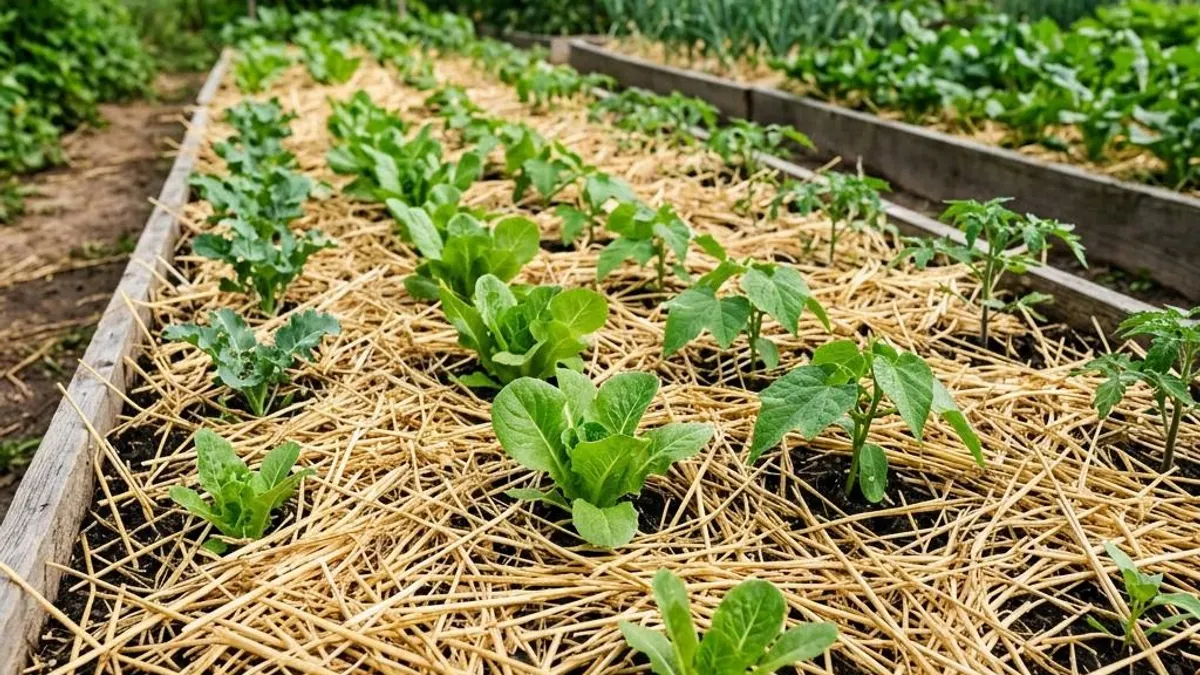
Straw mulch is made from wheat, oat, or rye straw — the dried stalks left after grain harvest. It's a lightweight, low-cost option primarily used in vegetable gardens, new lawn seeding, and erosion control on freshly graded slopes. Straw mulch breaks down in a single season, adding organic matter to the soil.
Material Properties
| Color | Golden yellow, turns gray-brown as it decomposes |
| Texture | Loose, airy stalks — easy to spread by hand or pitchfork |
| Longevity | 4–6 months — breaks down within a single growing season |
| Recommended Depth | 2–3 inches for gardens; 1 inch for new seed |
| Weight | Approximately 40–50 lbs per bale |
| Coverage | 1 bale covers roughly 200 sq ft at 2 inches deep |
Not sure how much to order?
Plug your bed sizes into the free mulch calculator to get cubic yards and bag counts in seconds.
Best Uses in Indianapolis
Ideal applications
- Vegetable and herb gardens
- New lawn seeding (erosion control)
- Strawberry patches
- Freshly seeded slopes
- Temporary pathways between garden rows
Advantages
- Inexpensive and widely available from Indiana farm stores
- Excellent for vegetable gardens — no chemical treatments, safe for food crops
- Lightweight and easy to handle without equipment
- Keeps soil cool and retains moisture in summer heat
- Breaks down to enrich soil by season's end
Considerations
- Very short longevity — must be replaced each season
- Hay bales (often mislabeled as straw) contain weed seeds — always buy straw, not hay
- Can blow away in high winds before it settles
- Not durable for permanent landscape use
Installation Tips for Indianapolis
Getting the most from your Straw Mulch
- Always buy straw (not hay) — hay contains grass seeds that will sprout
- Spread 2–3 inches deep in vegetable beds; thin to 1 inch over new grass seed
- Water the straw after spreading to help it settle and stay in place
- Work decomposed straw into the soil at season's end as a soil amendment